Here's the alert breakdown I use myself: what it means, who issues it, and the specific steps that keep my household ahead of it instead of catching up after the fact.
TL;DR Quick Answers
air quality washington dc
DC's air quality can look perfect and still be unhealthy. Ozone season runs May through September, and hot, still afternoons push the AQI into unhealthy territory even under a clear sky. I've learned to check the actual number before I check the weather, because in this city the two rarely tell the same story.
Ozone season: May through September, worst on hot, sunny afternoons.
Sensitive groups: limit outdoor exertion at AQI 51+.
Everyone else: limit outdoor exertion at AQI 101+.
Simple habit: check a live AQI map before you plan anything outdoors, not after.
Top Takeaways
Check first, plan second: a clear sky doesn't guarantee clean air in DC, especially during ozone season from May through September.
Know your numbers: AQI 51 matters if anyone in the household is sensitive, and AQI 101 matters for everyone.
Tomorrow's forecast beats today's reading: ozone builds through the afternoon, so the next-day forecast often matters more than the current number.
Move exertion indoors or to mornings: outdoor workouts and yard work are safest before ozone has had time to build.
Check on higher-risk neighbors: older adults, young kids, and anyone with heart or lung disease feel the effects first.
A Washington DC air quality alert is a public notice that pollution levels in the region have reached, or are forecast to reach, a threshold on the Air Quality Index where health effects become likely for some or all residents. In this region, the alert almost always points to one of two pollutants. Ground-level ozone peaks on hot, sunny afternoons between May and September. Fine particle pollution spikes year-round and gets dramatically worse during wildfire smoke events between June and October.
The forecasts and alerts don't come from one single office. They come from a layered system. The National Weather Service Baltimore/Washington forecast office issues hazardous weather outlooks that fold in air quality language. The District's Department of Energy and Environment runs its own ground monitoring network. And the regional forecast that most local agencies rely on comes from the Metropolitan Washington Council of Governments. I treat all three as pieces of the same puzzle, not competing sources.
It helps to remember why this keeps happening. Washington, D.C. sits in a humid river basin (see Washington, D.C. for the geography), and that bowl-shaped terrain traps heat and pollutants on stagnant summer days, exactly when ozone builds fastest. That geography is part of why the District has struggled with ozone attainment for decades, and it's part of why I don't wait for a red or purple day to start paying attention.
What I do before an alert
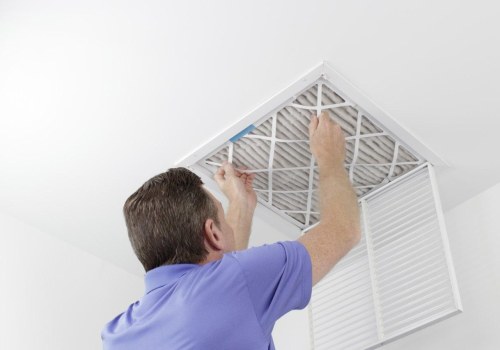
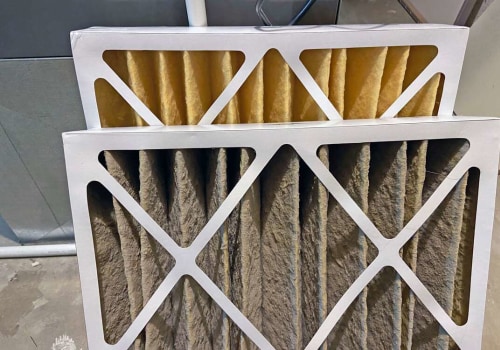
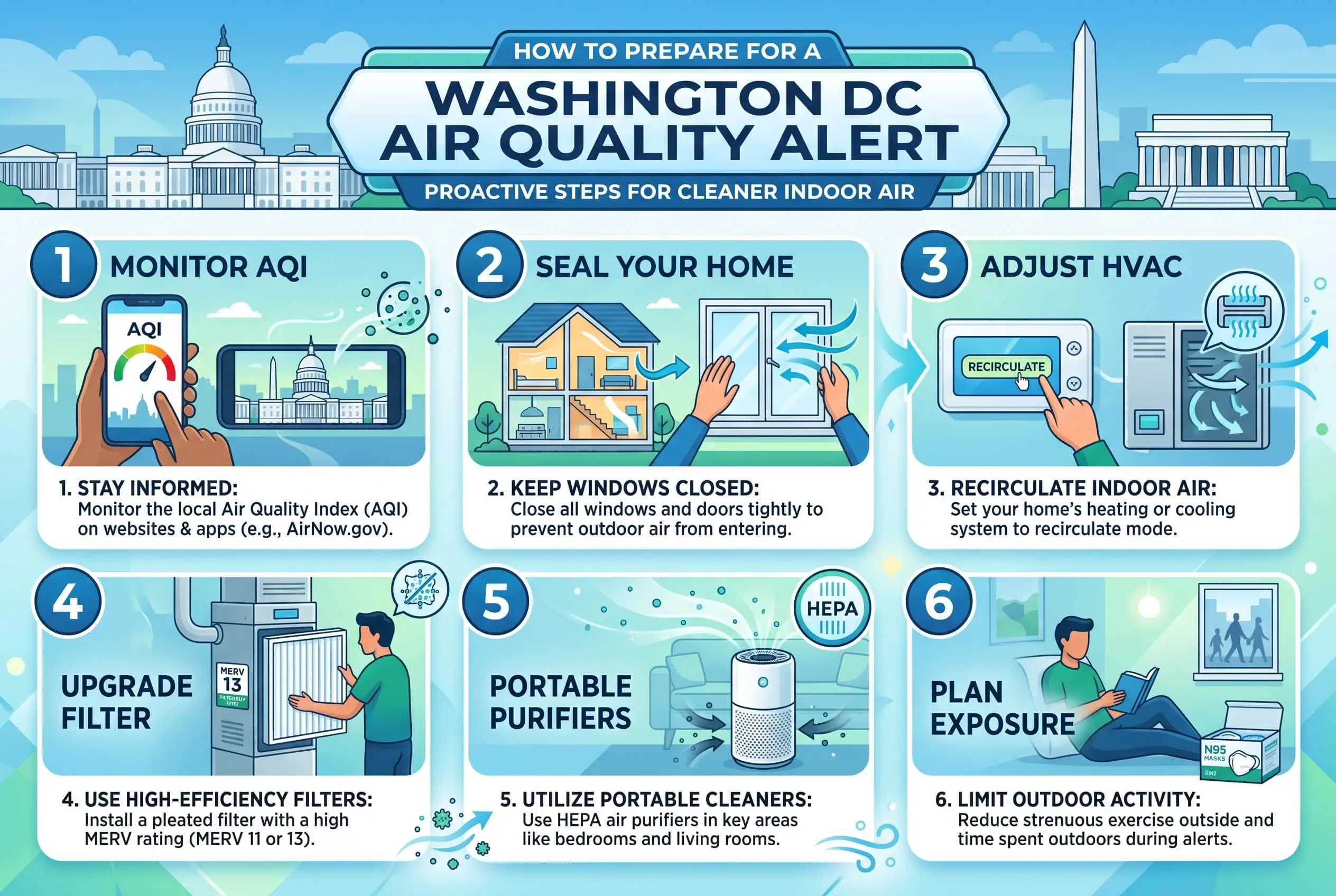
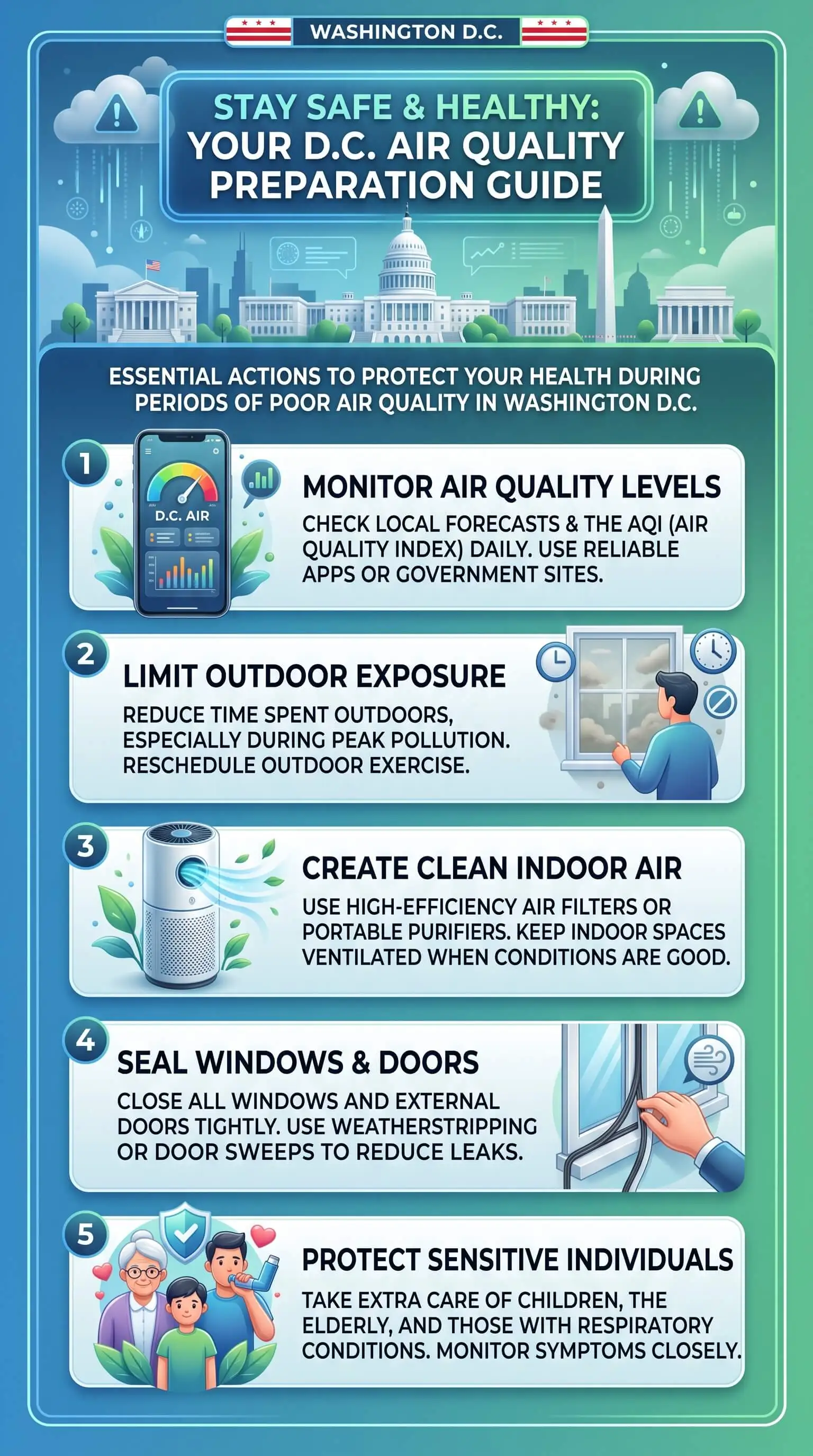
keep a live AQI map for the District bookmarked on my phone, so I'm never starting from zero when a hazy afternoon rolls in. Checking that map before I plan anything outdoors, a run, a kid's soccer practice, a patio dinner, has become as automatic as checking the weather, while making sure I have a high quality filter at home to help maintain cleaner indoor air.
I set a personal threshold at AQI 51 if anyone in the house has asthma, allergies, or another respiratory condition, and AQI 101 for everyone else. Those two numbers are what actually change my plans.
I keep windows closed and run the HVAC system on recirculate during ozone season afternoons, because outdoor pollutants get inside a home more than most people expect.
What I do during an alert
I move anything strenuous, a run, yard work, an outdoor practice, to the morning hours before ozone has had time to build, or I take it indoors entirely.
I watch for the specific signs that mean it's time to head inside: throat irritation, a cough that won't settle, chest tightness, or shortness of breath that feels unusual.
I check on higher-risk neighbors and family members. Older adults, young kids, and anyone with heart or lung disease feel the effects before healthy adults typically do.
“The alert that changes my plans is almost never the one for right now. It's tomorrow afternoon's forecast, because ozone builds through the day and peaks hours after most people already committed to being outside.”
7 Essential Resources
Know When It's an Action Day, Not Just a Bad Day
AirNow's explainer on action days breaks down exactly what triggers one and which sensitivity groups it hits first. Read the Action Days guide
Get the Straight Talk From the People Who Set the AQI Standard
The EPA's guidance on patient exposure and the Air Quality Index is written for clinicians, but it's one of the clearest breakdowns of who's most at risk and why. See EPA's patient exposure guidance
Follow the Forecast Office That Actually Covers DC
The National Weather Service's Baltimore/Washington office issues the hazardous weather outlooks that often carry air quality language for the District. Visit the NWS Baltimore/Washington office
See Where the District's Own Monitors Sit
DOEE runs six 24-hour monitoring stations across the District, and its page explains where they sit and why location changes the reading. Explore DOEE's monitoring network
Understand the Regional Partnership Behind the Forecast
Clean Air Partners is the nonprofit partnership behind much of the region's public air quality messaging, chartered by the area's two metropolitan planning organizations. Learn about Clean Air Partners
Learn Why Ozone Is the Region's Hardest Pollutant to Shake
The Ozone Transport Commission covers how ground-level ozone forms and travels across state lines, which is exactly why DC's ozone problem is a regional one, not just a local one. Visit the Ozone Transport Commission
Understand Who Faces the Highest Health Risk
The American Lung Association's health risk breakdown covers exactly which groups feel ozone and particle pollution first and worst. Read the Lung Association's health risk guide
These trusted resources help you understand Washington, DC's air quality forecasts, health risks, and monitoring systems, while learning about different types of air filters can help you improve the air inside your home when outdoor pollution levels are high.
3 Statistics
The District earned an F for ozone (weighted score 4.5) and a D for 24-hour particle pollution (weighted score 3.2) under the American Lung Association's 2026 State of the Air methodology, according to the presentation given to the region's own air quality planning committee. See the 2026 State of the Air presentation
Nationally, researchers project that by 2050 the combined effects of ozone and particle pollution could contribute to between 1,000 and 4,300 additional premature deaths a year in the United States, assuming regulations and population patterns hold steady. See CDC's climate and air pollution data
The District's population hit 702,250 residents in the most recent Census Bureau estimate, its highest count since 1970. That's a lot of people breathing the same air on the days an alert goes out. See Census Bureau population data for DC
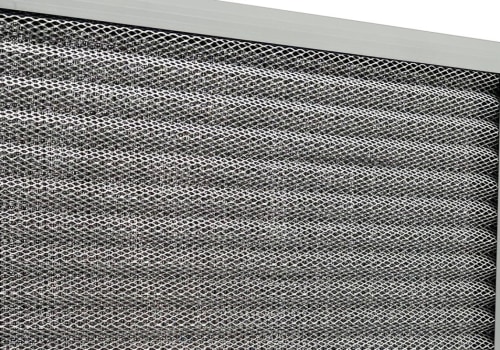
These statistics highlight the importance of monitoring Washington, DC's air quality, while using a MERV 8 pleated HVAC air filter can help reduce airborne particles indoors when outdoor pollution levels are elevated.
Final Thoughts and Opinion
Here's my honest take: DC's alert system works better than most people give it credit for, but only for the households that actually look at it. The alerts aren't going away. Given this region's ozone history, I don't expect that to change soon. What's changed for me is treating the AQI the way I treat a rain forecast. Check it. Plan around it. Pairing that habit with a top air filter at home can also help reduce your exposure to airborne particles that make their way indoors. Stop assuming a clear sky means the air is fine, because in this city, it often doesn't.
Frequently Asked Questions
How do I know if there's an air quality alert in DC today?
The fastest way is to check a live AQI map or the National Weather Service's Baltimore/Washington office. Both update through the day as conditions shift, while an ionizer can be considered as an additional indoor air quality measure when outdoor pollution levels are elevated.
Is it safe to exercise outside during an alert?
It depends on the level and your own sensitivity. Below AQI 100, most healthy adults can exercise outside with normal caution. Above that, I move workouts indoors or to early morning, before ozone has had time to build.
Who's most at risk during a code orange or code red day?
Children, older adults, pregnant people, and anyone with asthma, COPD, or heart disease face the highest risk, because their bodies handle the added pollution load the worst.
Why does DC struggle with ozone specifically?
The District's river-basin geography traps heat and pollutants on stagnant summer days, and ozone forms regionally. That means DC inherits pollution that starts well outside its own borders.
Does a dirty outdoor air day affect the air inside my home?
Yes. Outdoor pollutants get into homes through doors, windows, and HVAC systems more than most people expect, which is why I keep windows closed and run the system on recirculate during alert days.
CTA
Washington DC's air can look clean and still carry real risk, especially on hot, still afternoons between May and September. Make checking today's AQI as automatic as checking tomorrow's forecast, and consider indoor air quality testing to better understand the air you're breathing once you're back inside, so you'll spend a lot less time reacting to alerts after the fact.